Design-Build Lighting in Dallas: How Big Projects Go From Concept to Commissioning
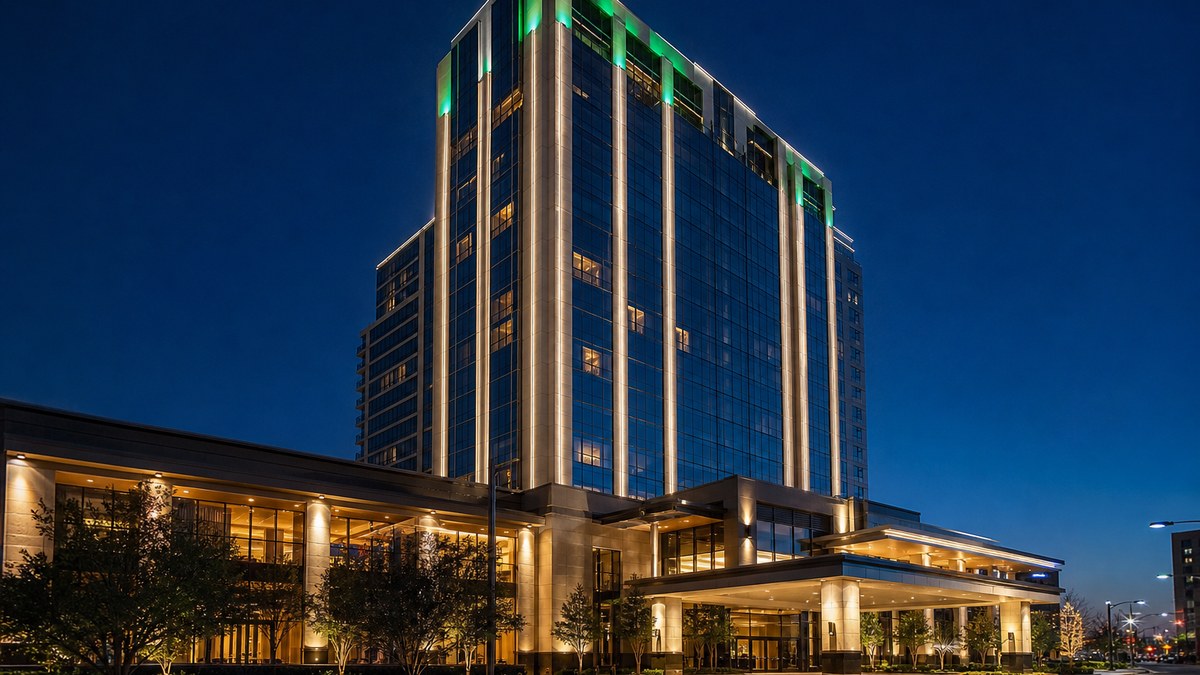
Design-build lighting in Dallas puts one accountable team in charge of a large lighting project from the first site walk to the last commissioned scene. For hotels, arenas, entertainment venues, high-rise towers and big commercial buildings, that single line of responsibility is often the difference between a lighting system that looks exactly like the renderings and one that ends in finger-pointing between a designer, a supplier and an installer.
Large lighting projects have more moving parts than most owners expect: photometric design, fixture specification, controls and programming, power and data infrastructure, structural mounting, city approvals, freight, lift access, night work, commissioning and long-term service. When each piece is bought separately, the owner becomes the project manager by default. Design-build changes that. It is the model behind our Luminance design-build program, and this guide explains exactly how it works, step by step.
You will learn what design-build means for lighting, how it compares with design-bid-build and design-assist, what happens in each phase, how big-project fixtures are specified and sourced, how Dallas code and climate shape the work, and how to get an accurate, project-specific quote.
Design-build lighting means one partner is responsible for designing, supplying, installing, commissioning and servicing a lighting system under a single agreement. For large Dallas projects it typically includes:
- Discovery & audit: site survey, goals, existing conditions and a baseline
- Design: lighting concepts, renderings, photometrics and a controls plan
- Specification & supply: fixtures chosen for performance, ratings and serviceability
- Mockups: real fixtures tested on site before full rollout
- Installation: licensed, phased work around guests, events and tenants
- Commissioning & service: every scene, schedule and sensor tested, then maintained
What is design-build lighting?
Design-build is a project delivery method, not a product. According to the Design-Build Institute of America, the design-builder “enters into a single contract with the owner to provide both design and construction services,” and “the single point of responsibility contract is the design-build distinction.” DBIA points to faster delivery, cost efficiencies from designers and builders working together, and fewer changes and claims as core benefits.
Applied to lighting, that means the same team that imagines the lobby glow or the tower crown is also responsible for choosing fixtures that can actually produce that look, getting them to the site, installing them safely and programming them to behave as designed. If something does not perform, there is no debate over whether it was a design problem, a product problem or an installation problem. It is one team’s problem to solve.
For owners of big properties, design-build lighting is especially valuable because lighting touches so many other trades. It depends on electrical capacity, data networks, building automation, structure, architecture, interiors, signage and sometimes AV. A design-build partner coordinates those interfaces instead of leaving them to change orders.
Design-build vs. design-bid-build vs. design-assist
There are three common ways to deliver a large lighting project. Each can work, but they put very different amounts of risk and coordination on the owner.
| Delivery method | How it works | Owner’s role | Best fit |
|---|---|---|---|
| Design-bid-build | A designer completes drawings; contractors bid; the low bidder installs | Manages separate contracts and resolves gaps between them | Simple, fully defined scopes with little visual risk |
| Design-assist | A contractor or supplier advises the design team during design, then usually installs | Still holds the design contract and coordinates both sides | Projects with an architect of record who wants builder input |
| Design-build | One partner designs, specifies, supplies, installs, commissions and services | Sets goals, approves design and mockups, receives one proposal | Hotels, venues, towers and large properties where the result matters |
Design-bid-build tends to reward the lowest price on paper. That is fine for replacing identical troffers in a simple office, but on a facade, ballroom or arena concourse it often leads to value-engineered substitutions that change color quality, beam spread or controllability — differences that only become visible after installation. Design-build keeps the people who set the visual goals involved in every product decision.
Design-build does not mean ignoring your architect or interior designer. On many large projects our role is to turn their vision into a buildable, maintainable lighting system and to be the single party accountable for delivering it.
Why big Dallas projects need one accountable team
The bigger and more visible the property, the more expensive a lighting mistake becomes. A few examples of where fragmented projects typically go wrong:
- Hotels: brand standards for color temperature and light levels, guest-room phasing and overnight work all have to line up. See our hotel LED lighting guide.
- Arenas and stadiums: sports lighting, show lighting, concourses, clubs and exterior facades often come from different vendors that must share one control strategy. Our stadium and arena lighting guide covers the systems.
- Entertainment venues: marquees, facades, lobbies and rooftop spaces need to feel like one brand after dark. Read the marquee and entertainment venue lighting guide.
- High-rise towers: facade lighting mixes structural mounting, weather, aviation and wildlife considerations, controls and city visibility. Our high-rise facade lighting guide goes deep.
- Large commercial portfolios: office towers, garages and distribution centers need retrofits that do not interrupt tenants. Start with our commercial LED retrofit guide.
In every case, the owner wants one outcome: a lighting system that looks right, works reliably, saves energy and can be maintained for years. Design-build is the most direct way to buy that outcome rather than a pile of parts.
The design-build process, phase by phase
Every project is different, but large design-build lighting projects in Dallas usually follow seven phases. This is how the Luminance program is structured.
1. Discovery and lighting audit
The project starts with a site or virtual discovery session: what the owner wants people to feel, which spaces matter most, operating hours, brand standards, events, tenant constraints and budget expectations. For existing buildings, a commercial lighting audit catalogs fixtures, run hours, controls and problem areas. That baseline drives energy projections and any incentive applications, and it prevents surprises such as undersized circuits or inaccessible mounting locations.
2. Concept design and renderings
Next comes a custom lighting design document. On larger projects it includes 3D renderings that show how the facade, lobby, ballroom or concourse will look at different times of night and in different scenes. This is where the owner approves the look before anything is ordered. Good concept design is layered: ambient light for visibility, accent light for architecture and art, feature elements for identity, and dynamic color only where it adds value.
3. Engineering and specification
The concept is turned into a buildable package: photometric calculations, fixture schedules, beam angles, color temperatures, color rendering targets, mounting details, power and data riser requirements, and a controls narrative that defines every scene, schedule and sensor. This is also where energy code compliance is designed in rather than patched on later.
4. On-site mockups
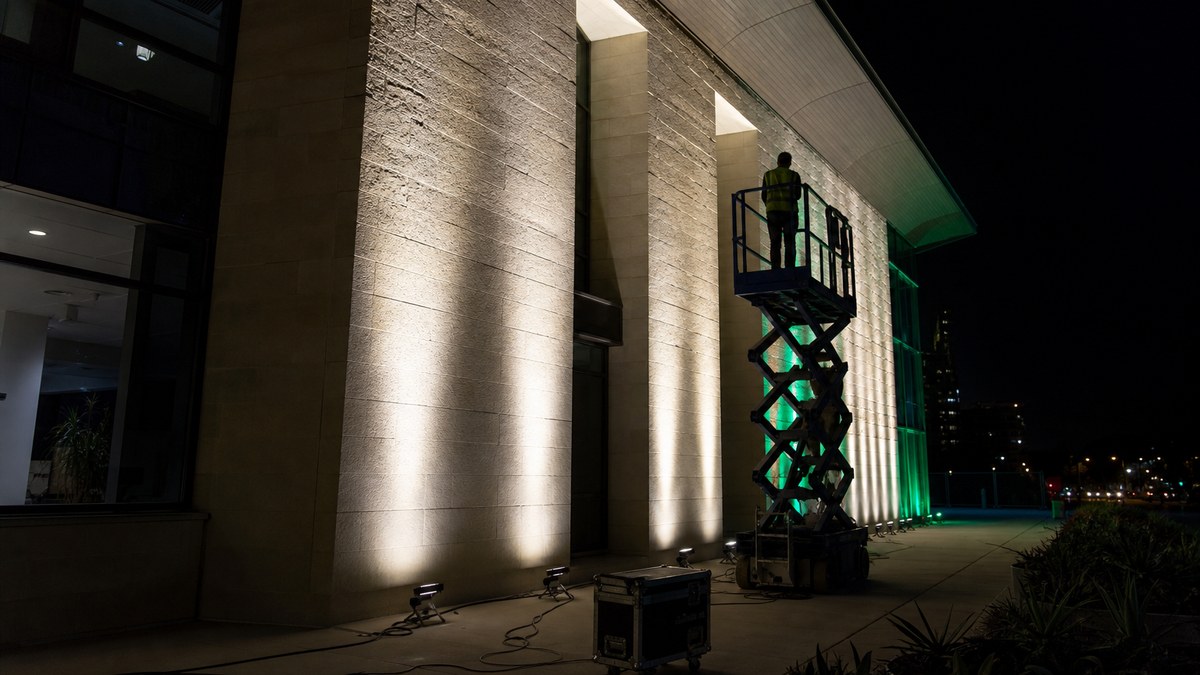
For facades, marquees, lobbies and other high-visibility spaces, a mockup is the most valuable day in the project. Real fixtures are mounted on the real surface and aimed at night, so the owner, architect and operator can compare options in person. Mockups catch issues no rendering can: glare from a nearby balcony, a stone that turns green under the wrong white, or a grazing angle that exaggerates surface imperfections.
5. Supply, freight and logistics
Once the design is approved, fixtures, drivers, power supplies, controllers and mounting hardware are procured to the exact specification. Large projects need staged deliveries that match the installation phasing, secure storage, labeling by zone and a plan for spare parts. Supply is where substitutions creep in on fragmented projects; on a design-build project, nothing changes without the design team signing off.
6. Licensed, phased installation
Installation is managed by licensed crews with dedicated project management and on-site quality inspection. Work is phased around guests, tenants, games, shows and events — often overnight or zone by zone. On towers and venues it also means planning lifts, swing stages, rigging, street or sidewalk use and safety coordination with building management.
7. Commissioning, training and ongoing service
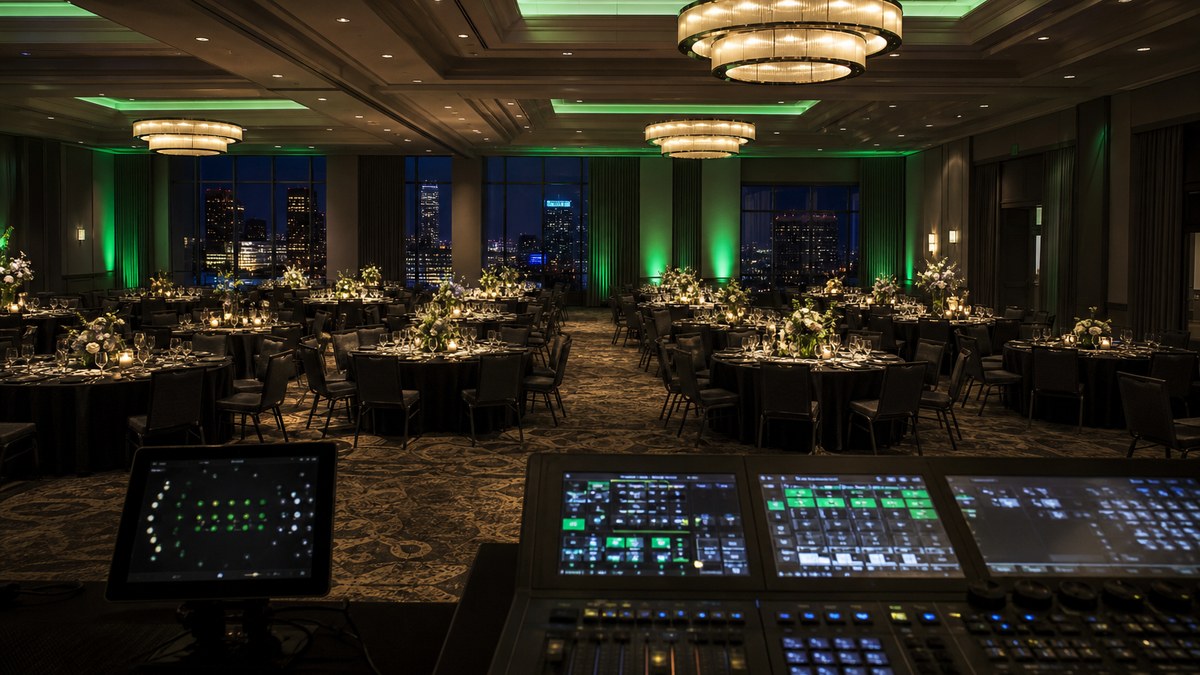
Commissioning is where a lighting system becomes a finished product. Every fixture is verified, every address mapped, every scene built and every schedule, astronomical time clock and sensor tested. Staff are trained on the controls, and the owner receives documentation. Ongoing service then covers maintenance visits, remote diagnostics where the system supports it, warranty claim management and seasonal scene reprogramming for holidays and events.
One partner. Every phase handled.
Discovery, design, supply, licensed installation, commissioning and ongoing service for hotels, venues, towers and large commercial properties across Dallas–Fort Worth and beyond.
Looking for an LED manufacturer in Dallas? Read this first
Many owners and developers start their search by looking for a commercial LED manufacturer in Dallas. It is a reasonable instinct: if you need thousands of fixtures, why not go straight to the source? For big projects, though, the fixture is only one part of the result. A manufacturer sells products; it rarely designs the whole space, coordinates the electrical and controls work, installs at height, commissions the system and services it for years.
To be clear, Dallas LED Lights is not a fixture manufacturer. We are an authorized architectural lighting dealer and project coordinator, which means we specify and source from established architectural, entertainment and commercial lighting manufacturers based on what each space needs. That independence is an advantage: the design is not limited to one factory’s catalog.
How big-project fixtures are specified
When we evaluate fixtures for a large Dallas project, the questions go well beyond wattage and price:
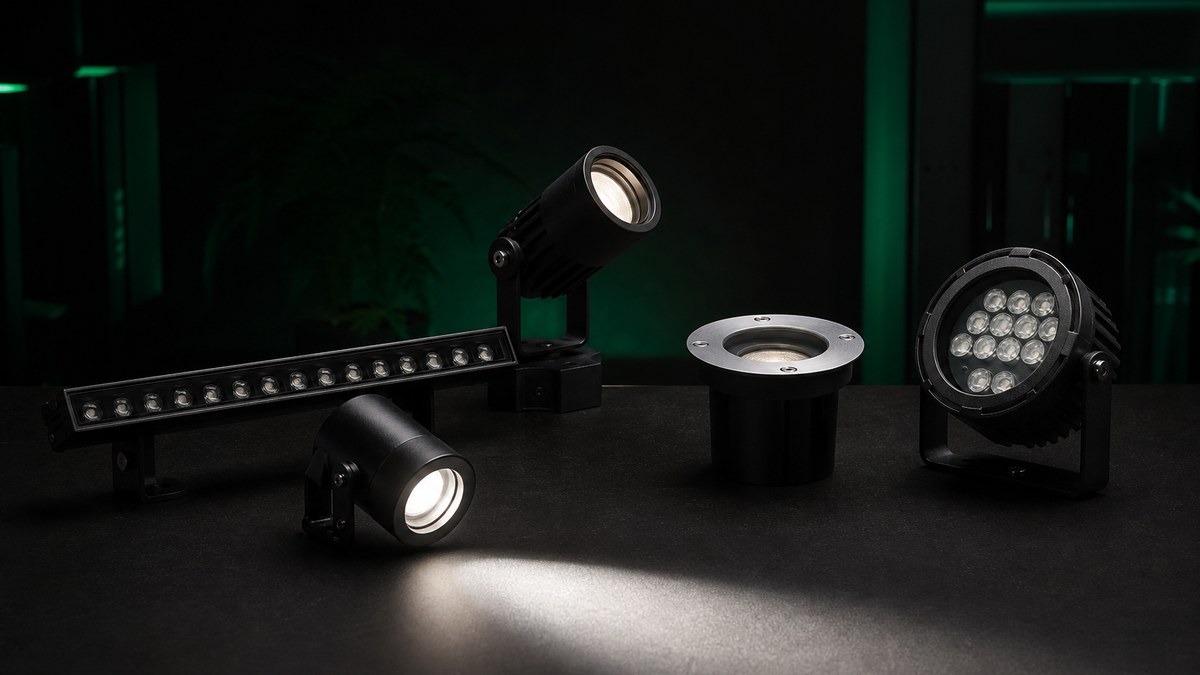
- Photometric performance: tested light output and distribution (for example, LM-79 test data) that matches the design calculations.
- Lumen maintenance: LED package data (LM-80) and projections (TM-21) that indicate how output holds up over time.
- Color quality and consistency: color rendering, tight color binning and consistency between production batches, which matters on long facades and in lobbies.
- Environmental ratings: ingress protection (IP) and impact (IK) ratings and operating temperature ranges suited to Texas exteriors.
- Safety listings: UL or ETL listing appropriate to the location, plus any listings that utility incentive programs require.
- Controls compatibility: native support for DMX, DALI, 0–10V or networked controls, so fixtures behave as programmed.
- Serviceability: replaceable drivers, accessible mounting and long-term parts availability.
Why sourcing through a design-build partner protects you
Buying direct can look efficient until a mixed shipment arrives, a driver is incompatible with the control system, or a color-changing fixture flickers on camera during a televised event. A design-build partner owns those risks. If wholesale components are what you need for your own team, our network partners offer wholesale LED solutions; if you need the whole result delivered, design-build is the better fit.
Controls, code and commissioning in Dallas
Controls are where large lighting systems succeed or fail. A big property can have thousands of fixtures and hundreds of zones, and without a clear control strategy, even beautiful fixtures end up stuck on one setting.
- DMX and RDM: common for color-changing architectural, facade and entertainment lighting where individual fixtures or pixels need precise control.
- DALI and networked systems: common for dimming, monitoring and scheduling across hotels, offices and venues.
- Sensors and schedules: occupancy, vacancy and daylight sensors plus astronomical time clocks for exterior lighting.
- Integration: connections to building automation, AV systems or show control where the project calls for it.
Code matters too. The City of Dallas lists its 2021 Commercial Energy Code as effective May 12, 2023, on its Know the Code page, and modern energy codes require automatic shutoff and other lighting controls in many spaces. Other DFW cities adopt their own editions and amendments, so the design team should confirm the applicable code for each address. Designing compliance into the controls narrative keeps permit reviews and inspections smoother.
What makes design-build in Dallas–Fort Worth different
Heat, hail and storms
North Texas summers push exterior drivers and power supplies hard, and spring hail and wind are a real risk for facade and rooftop equipment. Design-build teams choose housings, lenses, mounting details and enclosure locations with that climate in mind, then document them so service teams know what was installed and why.
Event calendars and visibility
DFW hosts major sports, concerts, conventions and international events. Properties near venues and along the freeways want lighting that can join the moment with team colors or event themes, and they need installation schedules that avoid those same dates. A single partner can plan both.
Scale across a metroplex
Many owners hold properties in Dallas, Fort Worth, Arlington, Irving, Plano and Frisco. Design-build makes it easier to apply consistent standards, fixtures and controls across a portfolio, and to service it with one team. If your properties are preparing for big crowds, read is your Dallas property World Cup ready.
Energy savings and incentives
Replacing older fluorescent, metal halide and halogen lighting with LED commonly cuts lighting energy by 50–75%, and controls can reduce it further. Large commercial properties may qualify for utility energy-efficiency incentive programs, such as those offered through Oncor, depending on program availability. The audit and design documents from a design-build project make those applications far easier.
How to get an accurate commercial LED lighting quote
We do not publish one-size-fits-all pricing, because big-project costs depend on scope, fixture and control choices, access, phasing and site conditions. What we can do is make the proposal process fast and clear. Owners who share the following get the most accurate project-specific proposal:
- The spaces in scope: facade, lobby, ballroom, concourse, garage, rooftop or the full property.
- Goals: brand presence, guest experience, energy reduction, safety, events or all of the above.
- Drawings and photos: architectural plans, elevations, existing fixture photos and electrical information if available.
- Timeline: openings, renovations, events or brand inspections the project must work around.
- Operating constraints: hours of operation, tenant or guest occupancy and access limits.
Send that through our project quote form or contact page, and we reply within one business day. If you only need a display component, start with an LED video wall quote.
Choosing a design-build lighting partner in Dallas
Not every lighting company can deliver a large design-build project. Ask any candidate to show you:
- Big-project experience with hotels, venues, towers or large commercial buildings.
- Real design capability, including renderings, photometrics and controls narratives.
- Independent specification rather than a single-catalog sales pitch.
- Licensed installation with project management and quality inspection.
- Commissioning and training as defined deliverables, not afterthoughts.
- Ongoing service after handover.
Here is what we can verify: our licensed installation partner has completed over 200 major sports and commercial projects across the US and Canada — NFL, NBA, NHL, MLS, NCAA and NASCAR. Our team brings 15+ years as an authorized architectural lighting dealer and project coordinator. Learn more about our team and our full range of LED lighting services.
Design-build also scales down for single-feature work and specialty systems. Our network includes LED signs and marquees, fiber optic starlight ceilings and pool and amenity deck lighting that can be folded into one Luminance program. For broader reading, see our architectural LED lighting guide, our overview of commercial lighting in Dallas, the complete guide to LED lighting in Dallas, our premium lighting solutions, and the warning signs your building needs a lighting audit.
Frequently Asked Questions
What is design-build lighting?
How is design-build different from design-bid-build?
What types of projects benefit most from design-build lighting?
Is Dallas LED Lights an LED manufacturer?
Why are lighting mockups important on large projects?
What does lighting commissioning include?
Can a design-build lighting project happen while a property stays open?
Which energy code applies to lighting projects in Dallas?
How much does a design-build lighting project cost?
Do LED lighting upgrades in Dallas qualify for incentives?
Planning a large lighting project in Dallas–Fort Worth?
Tell us about your property. We will review it and send a clear, project-specific proposal covering design, supply, installation, controls, commissioning and service.
Related services
Our partner network covers large projects across Texas and beyond: Fort Worth LED lighting, commercial LED lighting in Arlington, LED lighting in Plano, Irving LED lighting services, Texas-wide LED lighting, and wholesale LED components, plus fiber optic lighting solutions, modular building solutions, and modular structures in Dallas.