Marquee & Entertainment Venue Lighting in Dallas: The Complete Guide for Theaters, Music Venues & Nightlife
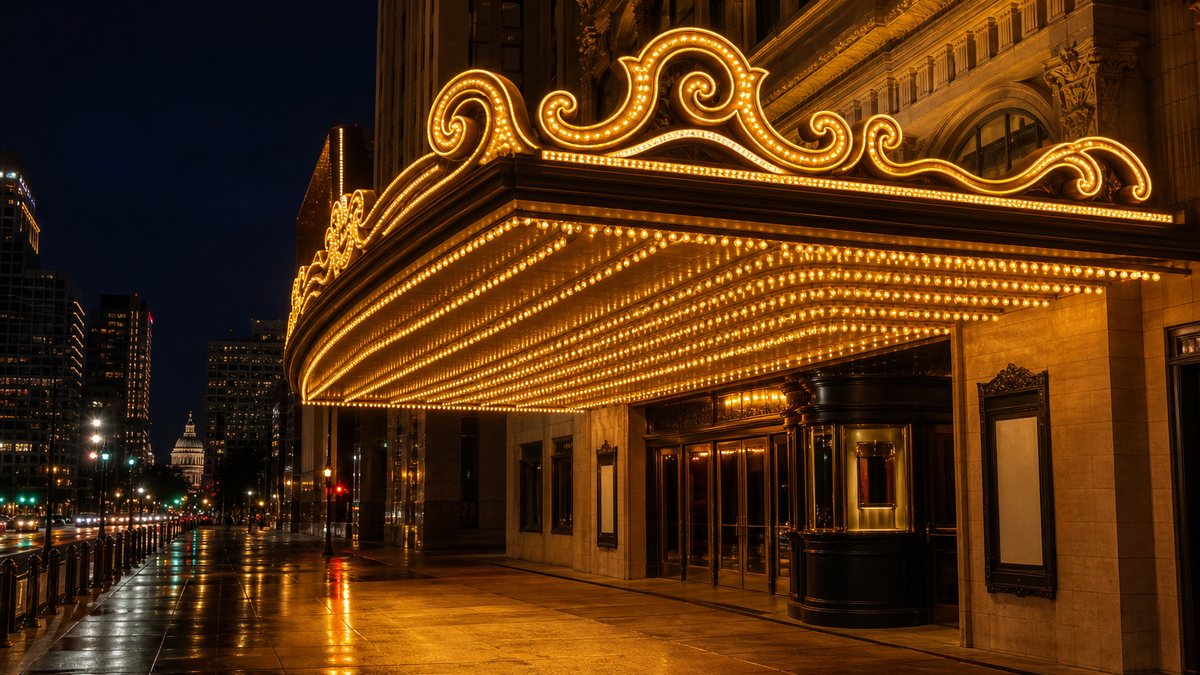
Entertainment venue lighting in Dallas starts on the sidewalk. Long before the curtain rises or the headliner walks on stage, guests meet your venue through its marquee, its facade, and the glow they see from the end of the block. For theater operators, music-venue owners, entertainment-district developers, and anyone running a large nightlife or event property in DFW, lighting is the first act — and it plays every single night.
Marquees and entertainment venues are also some of the most demanding lighting projects in commercial construction. They combine signage, architectural facade lighting, interior house and lobby lighting, stage-adjacent effects, LED video, and controls that have to change looks in seconds. Getting every piece to work as one system is exactly why large venues need a single design-build partner instead of five separate contractors. That is the idea behind our Luminance design-build program.
This guide covers how modern LED marquees work, how to light an entertainment venue zone by zone, how to modernize a historic marquee without losing its character, what Dallas permitting and weather mean for your project, and how to choose the right partner for a big venue lighting job.
A complete marquee and entertainment venue lighting project in Dallas usually includes:
- The marquee: LED chaser bulbs, neon-look LED, and channel letters — often with a full-color LED message display
- Facade & exterior: architectural wall washing, grazing, and color-changing scenes that make the building a landmark
- Lobby & front of house: layered, dimmable lighting with photo-ready feature moments
- House & event space: smooth-dimming house lights, aisle and egress lighting, and tunable or color fixtures
- Controls: DMX or networked scenes that sync marquee, facade, and interior for every show
- Energy: LED commonly uses 50–75% less energy than the incandescent, neon, and metal halide it replaces
Why the marquee is your venue's hardest-working asset
A marquee is advertising, wayfinding, brand identity, and atmosphere in one structure. It tells people what is playing tonight, where the entrance is, and what kind of experience waits inside. In busy districts like Deep Ellum, Uptown, Victory Park, the Downtown Arts District, and the entertainment corridors in Grapevine and Frisco, venues compete for attention on the same streets. The one that glows brightest — and most beautifully — wins the walk-up crowd and the photo.
That last point matters more every year. Guests share marquee photos before the show, tag the venue, and post the facade lit in event colors. A well-designed marquee becomes free marketing that travels across social media. A tired one, with dead bulbs and faded letters, sends the opposite message before guests ever buy a drink.
Marquees are also expensive to run the old way. Traditional incandescent chaser bulbs burn hot, burn out fast, and require lifts and labor every time a section goes dark. Neon tubing is fragile, hard to repair, and increasingly difficult to source and service. LED changes the math: lower energy, far fewer replacements, and effects that older technology simply cannot do.
Most venue owners think of their marquee as a sign. Think of it as a show. The same control system that runs your stage looks can run your marquee and facade, so the outside of the building changes with every performance.
How a modern LED marquee works
Today's marquees blend classic style with digital capability. A typical large-venue marquee includes several layers, each designed and wired to work together.
LED chaser bulbs and lamp borders
The iconic bulb border is still the signature of a theater marquee. LED lamps in classic globe shapes recreate the warm look of incandescent while drawing a fraction of the power. Because they are addressable, they can chase, twinkle, fade, and pulse in sequences that would require complex mechanical flashers with old bulbs. Warm-white LED lamps with filament-style optics keep the vintage feel that guests love.
Neon-look LED and channel letters
LED neon flex delivers the smooth, continuous glow of neon in a durable, low-voltage format. It bends to fit scripts and logos, survives vibration and weather far better than glass, and is much easier to service. Illuminated channel letters — front-lit, back-lit (halo), or both — carry the venue name. For the sign structure itself, our network partners at American LED Signage specialize in channel letters, marquees, pylons, and monument signs built to integrate with the lighting design.
Full-color LED message displays
Many venues have moved from manual changeable letters to full-color LED message centers on the marquee face. Staff can update tonight's acts from a laptop, schedule upcoming shows, and run sponsor content. For larger displays on the facade or in the lobby, see our LED video wall guide and request a proposal through the LED video wall quote page.
Soffit and under-canopy lighting
The underside of the marquee lights the entrance, the ticket line, and the sidewalk. Well-designed soffit lighting is bright, even, and glare-free, often using recessed LED downlights or a grid of classic lamps. This is where guests stand, wait, and take photos — so color quality and uniformity matter.
Controls and content
All of these layers come together through a controller. DMX or networked controllers run bulb chases and color scenes, while the message display runs its own content software. On a well-designed project, both are coordinated so the marquee, facade, and lobby can change together for a sold-out show, a holiday, or a sponsor night.
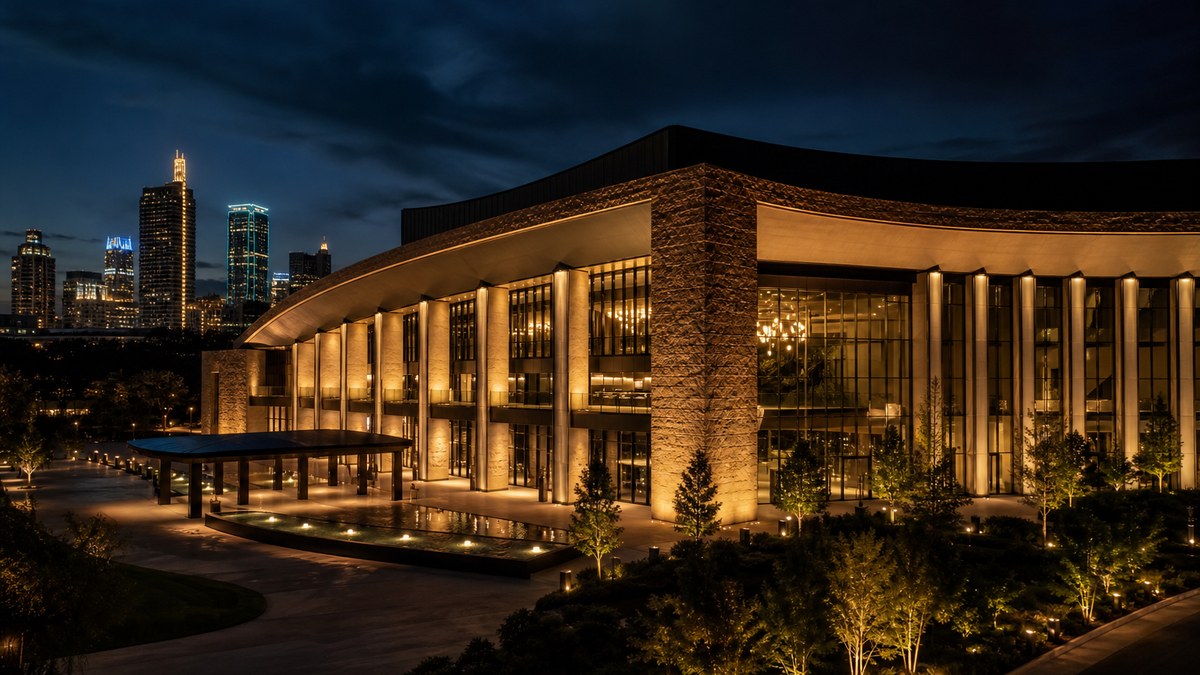
Entertainment venue lighting zone by zone
A marquee is only the beginning. Large venues need a complete plan where every zone supports the guest experience and the operating budget.
Facade and architectural lighting
The building itself is the biggest canvas you own. Linear wall washers, grazers on textured stone or brick, accent fixtures on columns and cornices, and color-changing systems turn a venue into a landmark. On a historic building, architectural light can highlight terra cotta and ornamental details that disappear in daylight. On a modern venue, it can wrap the building in event colors. Our guide to architectural LED lighting for Dallas commercial buildings covers fixture types and techniques in detail.
Entrances, ticketing, and queue areas
Lines form outside at night. Guests need clear, safe, welcoming light, and staff need good visibility for ticket scanning and security. Uniform light also improves security camera footage. Pairing efficient LED with accent lighting on the building name keeps this zone both practical and on-brand.
Lobbies, bars, and front of house
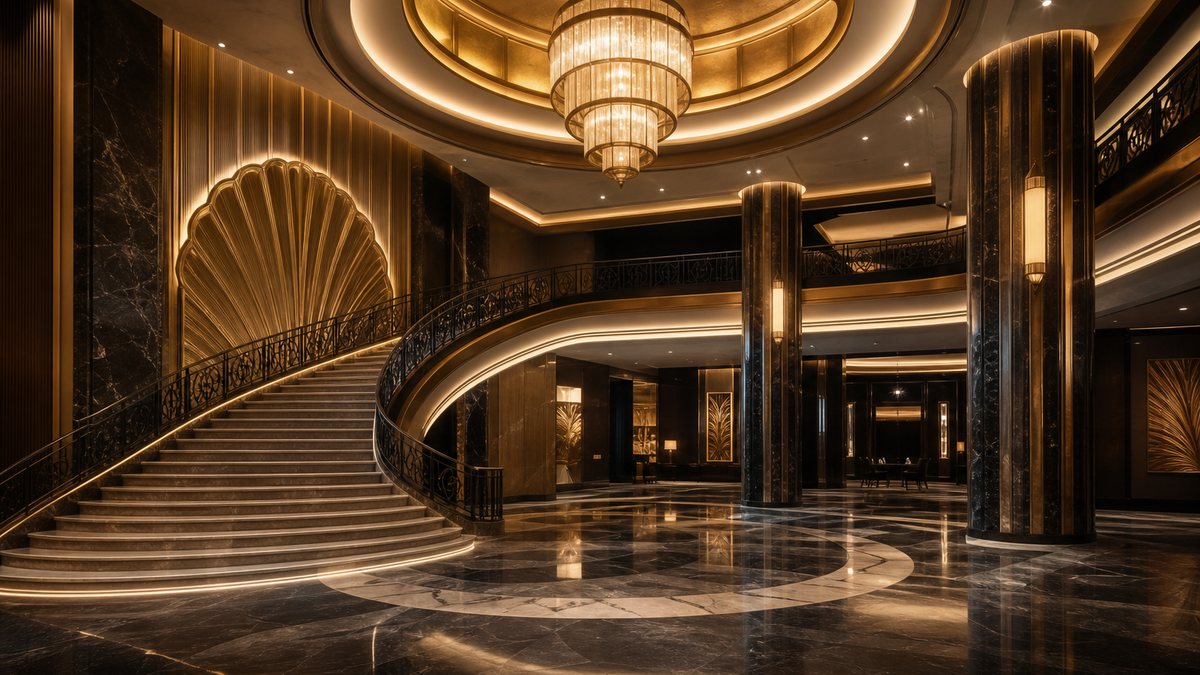
Lobbies set the mood between the street and the show. Layered lighting — ambient, accent, decorative, and task lighting at bars and concessions — should dim through scenes for pre-show, intermission, and post-show. Signature features earn their place here: a feature chandelier, a cove-lit ceiling, or a fiber optic starlight ceiling becomes the venue's Instagram moment.
House lighting and seating areas
House lights must dim smoothly to black without flicker or steps — something cheap LED drivers often fail to do. Professional-grade dimming drivers, proper control protocols, and on-site testing are what separate a theater-quality installation from a generic retrofit. Aisle, step, and egress lighting must meet life-safety codes while staying invisible during the show.
Event halls, ballrooms, and flexible spaces
Many entertainment properties also rent space for private events, corporate parties, and weddings. Tunable white, color-capable fixtures, and LED video walls let one room transform for every booking with pre-set scenes on a simple touch panel. Our hotel LED lighting guide covers ballroom lighting strategies that apply here too.
Rooftops, patios, and outdoor stages
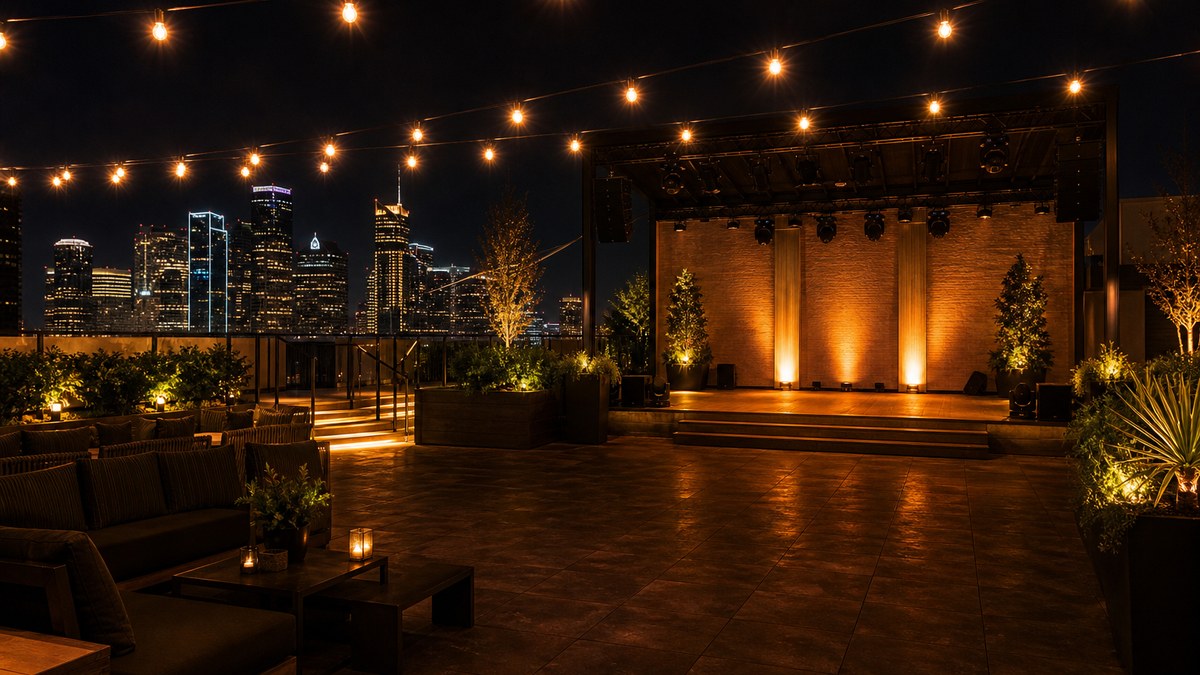
Outdoor spaces extend the night and the revenue. Exterior-rated festoon and string lighting, uplighting on trees and structures, and weather-rated color fixtures turn patios and rooftop decks into destinations. Venues with water features or pools can add specialty aquatic lighting from our partners at premium pool lighting.
Parking, garages, and back of house
Garages, loading docks, green rooms, and service corridors are where LED plus occupancy sensors deliver fast operating savings. Bright, uniform garage lighting also makes late-night exits feel safer for guests and staff.
Venue lighting plan at a glance
| Zone | Main Goal | Typical LED Approach | Controls |
|---|---|---|---|
| Marquee | Attention, identity, show info | LED chaser bulbs, neon-look LED, channel letters, LED message display | DMX chases, content software, schedules |
| Facade & exterior | Landmark presence | Wall washers, grazers, color-changing accents | Astronomical time clock, DMX scenes |
| Entrance & queue | Safety, welcome, security | Soffit downlights, accent lighting | Photocell, dimming schedule |
| Lobby & bars | Atmosphere, revenue | Layered ambient, accent, decorative, feature ceilings | Pre-show / intermission / post-show scenes |
| House & seating | Smooth dimming, safety | Theater-grade dimmable LED, aisle and egress lighting | DMX or DALI, integrated with show control |
| Event space | Flexibility, bookings | Tunable white, color fixtures, LED video walls | Touch-panel scenes |
| Outdoor & rooftop | Extended nights, photos | Exterior-rated festoon, uplights, color fixtures | Schedules, scenes |
| Garage & back of house | Energy, security | High-efficiency LED fixtures | Occupancy and daylight sensors |
Modernizing a historic marquee
Some of the most rewarding venue projects involve historic theaters and vintage marquees. Owners want the efficiency, reliability, and effects of LED without losing the look that made the building beloved. That balance is achievable with the right approach.
- Document first: photograph and measure the existing marquee, lamp spacing, letter styles, and colors before anything is removed.
- Match the warmth: choose warm-white LED lamps and filament-style optics that read like incandescent from the street.
- Respect the profile: keep the original silhouette, border patterns, and proportions; hide new drivers and controllers inside the structure.
- Upgrade the bones: inspect structure, wiring, and water intrusion — an LED retrofit is the right time to fix what is hidden.
- Check approvals: buildings in historic or special sign districts may need additional review before changes to the marquee or facade.
Done well, a historic marquee retrofit looks almost identical by day and better by night, with every bulb working and effects that bring the building back to life.
One partner for your entire venue
Marquee, facade, lobby, house, event space, controls, and ongoing service — designed, supplied, installed, and commissioned end to end for venues and large commercial properties across Dallas–Fort Worth.
Show-ready controls: syncing the whole building
The difference between a venue that simply has lights and a venue that puts on a show outside is controls. A networked lighting control system lets one operator — or one schedule — change the entire building's look in seconds.
- Show scenes: pre-show, doors, intermission, and post-show looks that move marquee, facade, and lobby together.
- Event colors: recall team colors, artist branding, sponsor colors, or holiday palettes on demand.
- Schedules: astronomical time clocks turn exterior lighting on at sunset and down after close automatically.
- Protocols: DMX and sACN/Art-Net for color and effects, DALI or networked systems for dimming and monitoring.
- Remote management: operations staff can check, schedule, and troubleshoot lighting from a dashboard.
Commercial energy codes based on IECC and ASHRAE 90.1 also require automatic shutoff and other controls in many spaces. A good design satisfies code while keeping guest-facing areas exactly as dramatic as the venue needs. Large venues and sports properties use the same principles at an even bigger scale — see our stadium and arena LED lighting guide.
Permits, codes, and Dallas weather
Marquees and facade lighting sit at the intersection of signage, electrical, and building codes. Planning for these early keeps a project on schedule.
Sign permits and districts
In the City of Dallas, signs are regulated through the sign provisions of the Dallas Development Code and permitted through the city's building inspection process. Parts of downtown and several entertainment areas fall within special sign districts with their own rules on size, brightness, motion, and digital displays. Suburban cities like Frisco, Grapevine, Irving, and Arlington each have their own sign ordinances. A full-color LED display, animated effects, or a larger marquee may require specific approvals, so it is wise to confirm requirements before design is finalized.
Electrical and life safety
Exterior lighting and signs must be listed for their application and installed to the electrical code. Inside, egress and emergency lighting must meet life-safety requirements regardless of show scenes. A professional design accounts for these from day one rather than retrofitting compliance later.
Heat, hail, and storms
North Texas summers push exterior LEDs, drivers, and controllers hard, and spring hail and wind storms test every lens and housing. Marquee and facade components should be rated for high ambient temperatures, sealed against water and dust, and mounted for wind loads. Specifying the right outdoor ratings up front prevents failures that are expensive to repair from a lift over a busy sidewalk.
Energy, maintenance, and incentives
Entertainment venues run exterior lighting every night and interior lighting for long event days. That makes them strong candidates for LED. Replacing incandescent marquee bulbs, neon, halogen, and metal halide with LED commonly reduces lighting energy by 50–75%, and adding controls can reduce it further.
Maintenance savings are often just as important. Fewer burned-out bulbs means fewer lift rentals, fewer late-night service calls, and a marquee that looks complete every night. Quality LED fixtures are commonly rated for 50,000 hours or more.
Commercial properties in the Dallas area may also qualify for utility energy-efficiency incentive programs, such as those offered through Oncor, depending on the project and program availability. A commercial lighting audit documents the baseline you need. If your building is showing any of the warning signs it needs a lighting audit, that is the right first step.
Every venue is different, so we do not publish one-size-fits-all pricing. We prepare a project-specific proposal after reviewing your property, your goals, and your event calendar. Start with our project quote form or explore our premium lighting solutions.
The project process: without going dark
Venues cannot cancel shows for a lighting upgrade. A well-run project works around the calendar.
- Site assessment: survey the marquee, facade, interiors, power, and existing controls, and review your event calendar.
- Design and renderings: fixture selections, color temperatures, effects, and control scenes — with mockups of key elements like marquee bulbs and facade washes.
- Permitting and approvals: sign, electrical, and any district reviews handled before installation begins.
- Phased installation: exterior work scheduled on dark days and overnight; interior work in blocks between events.
- Programming and commissioning: every scene, chase, schedule, and sensor tested and tuned.
- Training and service: your team learns the system, and ongoing service keeps the marquee shining.
Choosing an entertainment venue lighting partner in Dallas
Large venue projects need more than an electrician and a catalog. Look for a partner who brings:
- Big-project experience: venues, arenas, hotels, towers, and multi-building properties.
- Design capability: lighting that tells a story and strengthens your brand, not just fixture swaps.
- Signage coordination: marquee, sign, and facade lighting designed as one system.
- Controls expertise: DMX, DALI, and networked systems commissioned properly.
- Schedule awareness: installation plans built around shows and events.
- Ongoing service: support long after opening night.
Dallas LED Lights coordinates large lighting projects through the Luminance program, backed by 15+ years as an authorized architectural lighting dealer and project coordinator. Our licensed installation partner has completed over 200 major sports and commercial projects across the US and Canada — NFL, NBA, NHL, MLS, NCAA and NASCAR. Learn more about our team, browse our services, or see how we approach commercial lighting in Dallas.
With major global events coming to North Texas, venues near the action have an extra reason to look their best — read is your Dallas property World Cup ready. For a broader overview of technology and options, see our complete guide to LED lighting in Dallas.
Frequently Asked Questions
Can a classic theater marquee be converted to LED?
What is entertainment venue lighting?
How much energy does an LED marquee save?
Do I need a permit for a new marquee or LED sign in Dallas?
Can the marquee and facade change colors for events?
Will LED house lights dim smoothly in a theater?
Can a venue stay open during a lighting upgrade?
Do entertainment venue lighting upgrades qualify for incentives?
How much does a marquee or venue lighting project cost?
What other large projects does Dallas LED Lights handle?
Ready to light up your marquee and venue?
Tell us about your theater, music venue, or entertainment property. We will review it and send a clear, project-specific proposal covering design, permitting, installation, controls, and scheduling.
Related services
Our partner network covers large projects across Texas and beyond: Fort Worth LED lighting, commercial LED lighting in Arlington, LED lighting in Plano, Irving LED lighting services, Texas-wide LED lighting, and wholesale LED solutions, plus fiber optic lighting solutions, modular building solutions, and modular structures in Dallas.