Hotel LED Lighting in Dallas: The Complete Guide to Hospitality Lighting Design & Upgrades
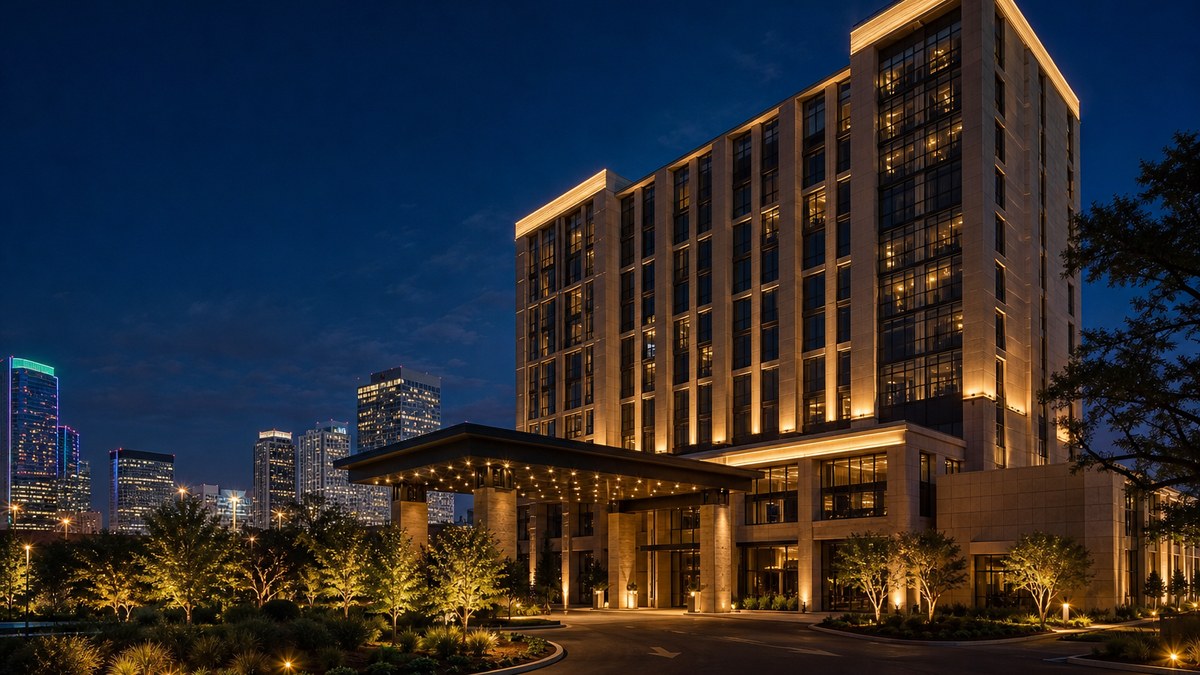
Hotel LED lighting in Dallas is no longer just an energy upgrade — it is how a property looks from the freeway, how a lobby feels at midnight, and how a ballroom shifts from a morning conference to an evening gala. For hotel owners, asset managers, and developers across the DFW metroplex, the right lighting program lowers operating costs, protects brand standards, and shows up directly in guest reviews.
Hotels are also one of the hardest lighting environments to get right. Lights run around the clock, every space has a different job, and work has to happen while guests are sleeping upstairs. That is why large hospitality projects need a single partner who can handle audit, design, supply, installation, and controls — the approach behind our Luminance design-build program.
This guide walks through every lighting zone in a modern hotel, the control systems that tie them together, how to phase a retrofit without closing floors, and what to ask before you choose a lighting partner in Dallas.
A hotel LED lighting project in Dallas should cover every guest-facing and back-of-house zone under one plan:
- Exterior & facade: architectural LED that makes the property a landmark after dark
- Arrival & lobby: layered, dimmable light that feels warm and premium 24/7
- Ballrooms & meeting space: tunable white and color scenes controlled from a touch panel
- Corridors, garages & back-of-house: high-efficiency LED with sensors — where most energy savings come from
- Energy impact: LED typically uses 50–75% less energy than the older lighting it replaces
- Installation: phased floor by floor, often overnight, so the hotel stays open
Why lighting is a hotel asset, not an expense
Guests judge a hotel in seconds. Before they see a room, they see the facade from the road, the porte-cochère at check-in, and the lobby. Lighting shapes every one of those first impressions. A dim, uneven entrance feels unsafe. A flat, over-bright lobby feels like an office. A well-lit property feels expensive — and guests are willing to pay for that feeling.
Lighting also has a direct line to the bottom line. Hotels run more lighting hours than almost any other building type. Corridors, stairwells, lobbies, garages, and exterior lighting often stay on all day and all night. That makes hospitality one of the strongest candidates for an LED upgrade, because every watt saved is saved for more hours of the year.
Finally, lighting protects your brand. Major hotel flags publish detailed lighting standards for color temperature, light levels, and fixture styles. A partner who understands those standards — and can document compliance — saves owners headaches during brand inspections and renovations.
The biggest savings in a hotel usually are not in the lobby. They are in corridors, stairwells, parking garages, and back-of-house spaces that run 24/7. Start your energy plan there, then invest in design where guests see it.
Hotel lighting zone by zone
Every area of a hotel has a different purpose. Here is how a complete hospitality lighting plan treats each one.
Exterior facade and architectural lighting
Your building is your biggest sign. Architectural LED — wall washers, linear grazers, accent fixtures, and color-changing systems — turns a hotel into a landmark on the skyline or along the tollway. Modern systems can change color for holidays, local sports wins, or events, all on a schedule. For a deeper dive, see our guide to architectural LED lighting for Dallas commercial buildings.
Porte-cochère, entrance, and drop-off
This is where guests step out of the car, often at night and often tired. The goal is bright, even, glare-free light that feels safe and welcoming, with warm color temperatures and accent lighting on landscaping, water features, and the building name. Your illuminated signage belongs in this plan too — our partners at American LED Signage handle channel letters, monuments, and marquees built to match.
Lobby and public spaces
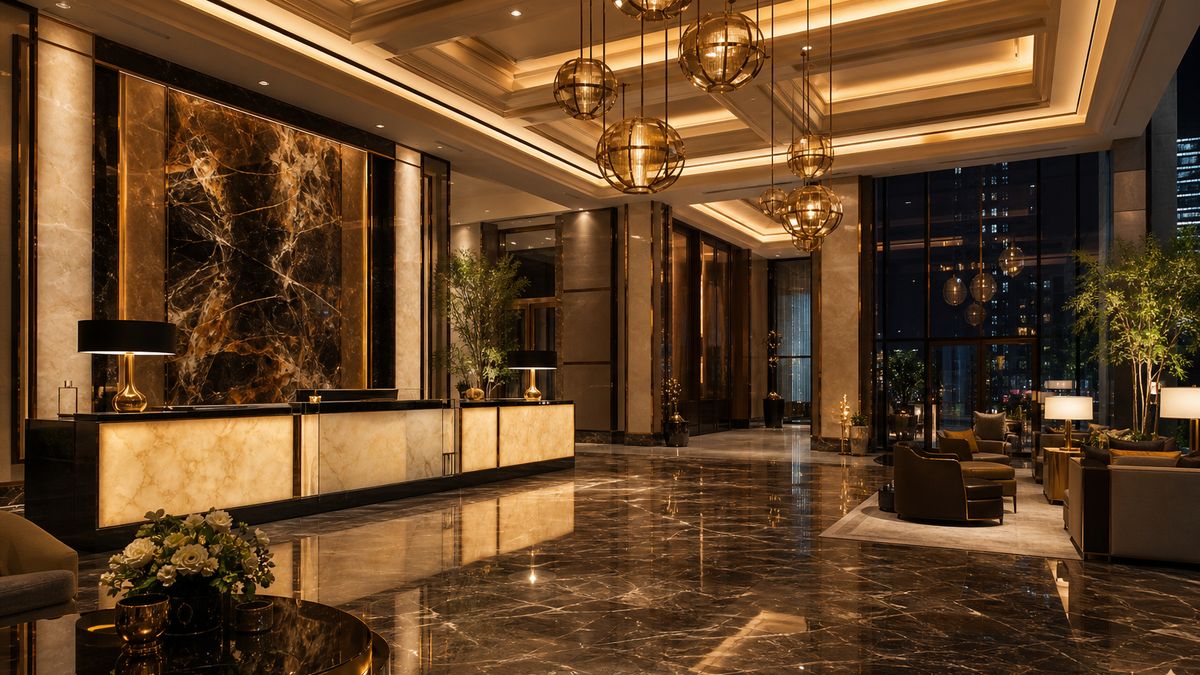
Great lobbies use layers: ambient light for general visibility, accent light on art and architecture, decorative fixtures for personality, and task light at the front desk. All of it should dim smoothly through the day so the space feels bright and energetic in the morning and relaxed and intimate at night.
Ballrooms, meeting rooms, and event space
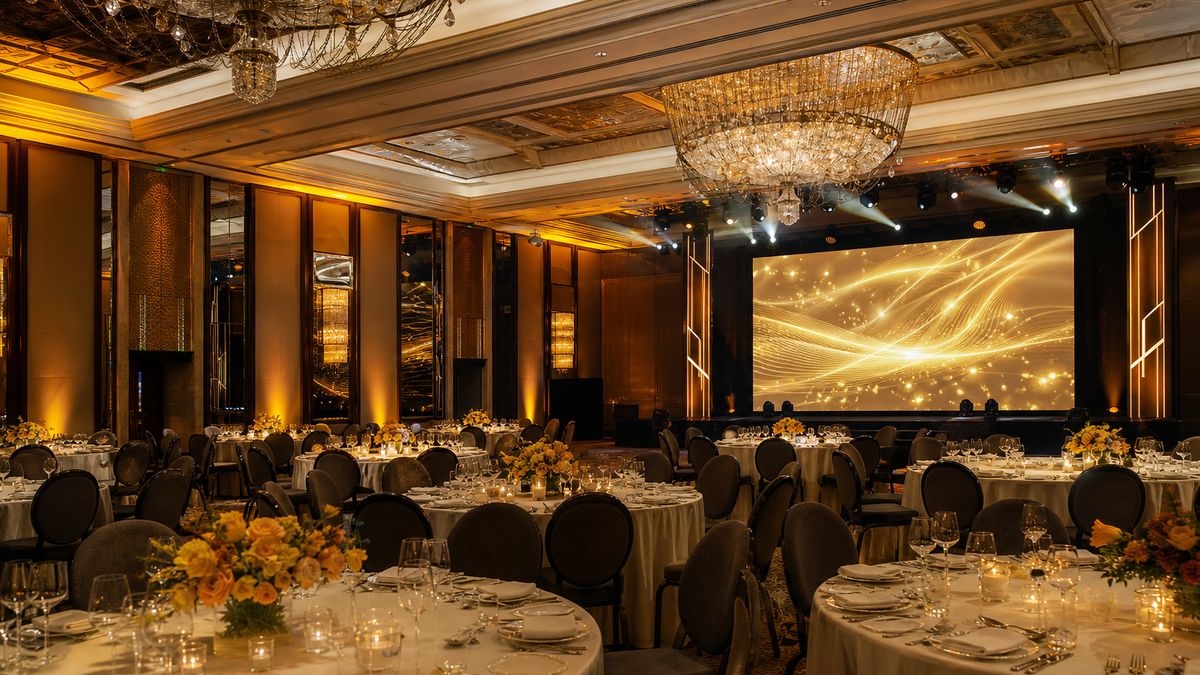
Event spaces earn revenue, and lighting sells events. Tunable white lets planners shift from crisp daylight for a conference to warm tones for dinner. Color-capable fixtures and LED video walls create stage looks, sponsor branding, and wedding scenes without renting outside equipment. Pre-set scenes on a simple touch panel mean staff can switch looks in seconds.
Restaurants, bars, and rooftop lounges
Food and beverage spaces need mood. Low, warm light with high color quality makes food look good and keeps guests lingering. Rooftop bars add exterior-rated fixtures, cove lighting, and sometimes signature features like fiber optic starlight ceilings that guests photograph and share.
Guest rooms and suites
Guest rooms need simple, intuitive controls, warm color, and accurate light at mirrors and desks. LED retrofits here cut energy and maintenance, and they reduce the number of lamps housekeeping and engineering teams replace each week.
Pools, spas, and amenity decks
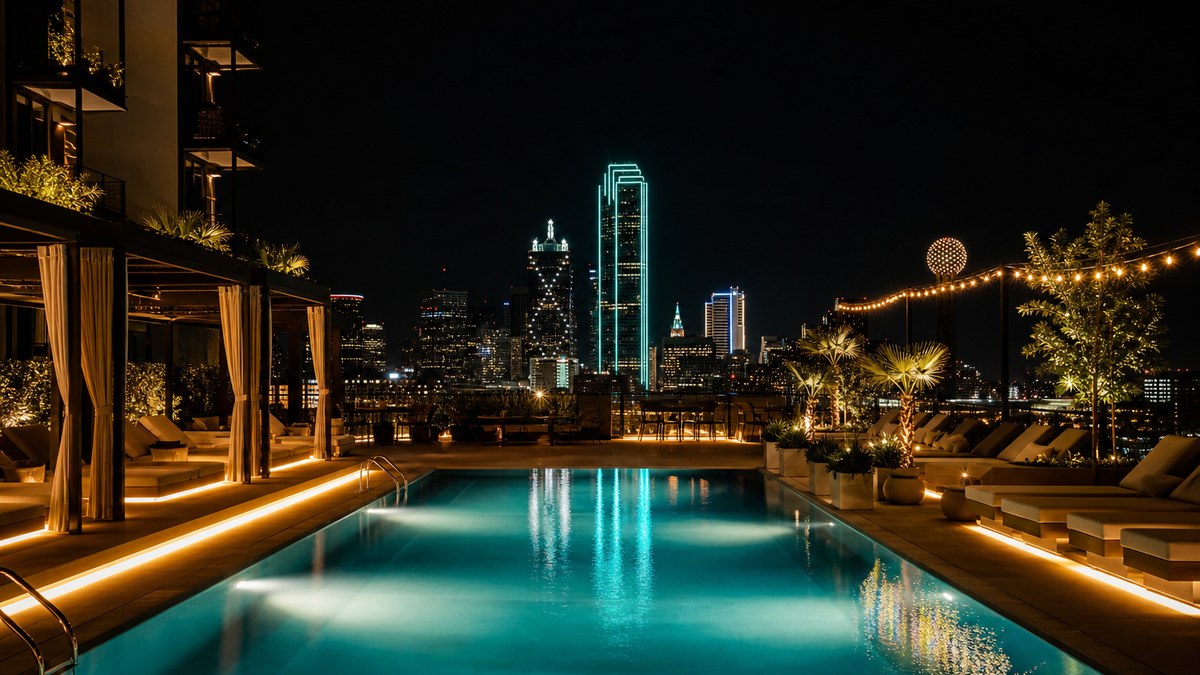
Underwater and deck lighting turns an amenity into a destination after sunset. Specialty pool lighting must be rated for the environment and installed to code — our network partners at pool and aquatic lighting focus on exactly this.
Parking garages and back-of-house
Garages, loading docks, kitchens, laundry, and service corridors are where LED plus occupancy and daylight sensors deliver the fastest payback. Brighter, more uniform garage lighting also improves safety and security camera footage.
Lighting plan at a glance
| Zone | Main Goal | Typical LED Approach | Controls |
|---|---|---|---|
| Facade & exterior | Visibility, landmark presence | Wall washers, grazers, color-changing accents | Astronomical time clock, scenes, DMX |
| Entrance & porte-cochère | Safety, welcome | Downlights, landscape and signage lighting | Photocell, dimming schedule |
| Lobby | Atmosphere, brand | Layered ambient, accent, decorative | Time-of-day dimming scenes |
| Ballrooms & meeting | Flexibility, revenue | Tunable white, color fixtures, video walls | Touch-panel scenes, DMX/DALI |
| Restaurants & bars | Mood, food presentation | Warm, high-CRI accent and cove lighting | Dimming scenes |
| Guest rooms | Comfort, simplicity | Warm LED retrofits, mirror and task light | Simple switching, key-card integration |
| Corridors & stairs | Safety, energy | Efficient LED with emergency backup | Occupancy step-dimming where allowed |
| Garages & back-of-house | Energy, security | High-efficiency LED fixtures | Occupancy and daylight sensors |
Controls: the brain of a modern hotel lighting system
Fixtures create light. Controls decide when, where, and how much. On large properties, a networked lighting control system is what turns hundreds or thousands of fixtures into one manageable system.
- Scenes: one-touch looks for lobby day and night, ballroom conference and gala, restaurant lunch and dinner.
- Schedules: astronomical time clocks adjust exterior lighting to sunset and sunrise automatically.
- Sensors: occupancy and daylight sensors reduce light in empty or sunlit back-of-house spaces.
- Protocols: DMX for color and architectural effects, DALI or networked systems for dimming and monitoring.
- Central management: engineering staff can see, schedule, and troubleshoot lighting from one dashboard.
Controls also help with code compliance. Current commercial energy codes, based on IECC and ASHRAE 90.1, require automatic shutoff and other controls in many spaces. A good design meets code while keeping guest-facing areas exactly as bright and welcoming as the brand requires.
One partner for your entire property
Audit, design, supply, installation, controls, and ongoing service — handled end to end for hotels, venues, and large commercial properties across Dallas–Fort Worth and beyond.
How to upgrade without closing floors
The number one concern we hear from hotel operators is disruption. Guests cannot be kept awake by lifts in the corridor, and revenue-generating space cannot sit dark. A well-planned project avoids both.
- Lighting audit: a room-by-room and zone-by-zone survey of fixtures, run hours, and problem areas. Our commercial lighting audit creates the baseline for savings and design.
- Design and mockups: fixture selections, color temperatures, and control scenes — with on-site mockups in key spaces before full rollout.
- Phasing plan: floor-by-floor and zone-by-zone scheduling built around occupancy, events, and brand inspection dates.
- Installation: much of the work happens overnight or in blocked-off sections, with crews that understand hospitality.
- Commissioning: every scene, schedule, and sensor is tested and tuned before handover.
- Training and service: engineering staff learn the system, and ongoing service keeps it performing.
Energy savings and incentives
Because hotels run lighting so many hours, an LED upgrade typically delivers some of the strongest savings of any building type. Replacing older fluorescent, metal halide, and halogen fixtures with LED commonly cuts lighting energy by 50–75%, and adding controls can reduce it further. LED fixtures also last much longer, which reduces lamp replacements, lift rentals, and engineering labor.
Commercial properties in the Dallas area may also qualify for utility energy-efficiency incentive programs, such as those offered through Oncor, depending on the project and program availability. A proper audit documents the baseline so you can apply for any incentives your project qualifies for.
Every property is different, so we do not publish one-size-fits-all pricing. Tell us about your hotel and we will prepare a project-specific proposal. You can start with our project quote form or see our full range of commercial lighting services.
What makes Dallas hotel projects different
Lighting a hotel in North Texas comes with its own set of challenges. A plan built for a mild coastal city will not hold up the same way here.
Heat and weather
Dallas summers push rooftop and facade equipment hard. Exterior LED fixtures, drivers, and controllers should be rated for high ambient temperatures and sealed against dust and driving rain. Hail and severe spring storms make fixture housings, lens materials, and mounting details more than a spec-sheet footnote. Choosing the right outdoor ratings up front prevents early failures that are expensive to fix at height.
Scale and competition
DFW is one of the largest hotel markets in the country, with properties clustered around downtown, the convention district, Las Colinas, both major airports, and the Frisco and Grapevine entertainment corridors. When a guest is choosing between several hotels on the same stretch of freeway, the property that stands out after dark has an edge. Facade lighting and a strong arrival experience are marketing that works every single night.
Big-event demand
Dallas regularly hosts major concerts, sports championships, and conventions. Hotels near venues see sudden spikes in demand and in social media exposure. Color-capable exterior lighting lets a property join the celebration with team colors or event themes, and ballroom systems with saved scenes make quick turnarounds between events far easier for staff.
Choosing a hotel lighting partner in Dallas
Large hospitality projects are not a job for a small electrical crew with a catalog. Look for a partner who can show you:
- Large-project experience — hotels, venues, towers, and multi-building campuses
- Design capability — not just fixture replacement, but lighting that improves the guest experience
- Controls expertise — DMX, DALI, and networked systems, commissioned properly
- Phasing and hospitality awareness — work plans built around occupancy and events
- Brand-standard knowledge — documentation that holds up to flag inspections
- Ongoing service — a team that stays with the property after the ribbon cutting
Hotels are not the only big projects in the city. With global events like those covered in is your Dallas property World Cup ready, owners of venues, towers, and commercial buildings in Dallas are upgrading too. If your property shows the warning signs it needs a lighting audit, now is the time to plan.
Dallas LED Lights serves hotels and large commercial properties across the metroplex, including Dallas, Fort Worth, Arlington, Irving, Plano, Frisco, and beyond. Learn more about our team, or read our complete guide to LED lighting in Dallas.
Frequently Asked Questions
How much energy can a hotel save with LED lighting?
Can a hotel upgrade its lighting while staying open?
What is architectural facade lighting for hotels?
What lighting is best for hotel ballrooms?
What lighting controls do large hotels use?
Do hotel lighting upgrades qualify for incentives in Dallas?
How long do commercial LED fixtures last?
What color temperature should hotel lighting be?
How much does a hotel lighting project cost?
Does Dallas LED Lights handle other large projects besides hotels?
Planning a hotel or large-venue lighting upgrade?
Tell us about your property. We will review it and send a clear, project-specific proposal covering design, installation, controls, and phasing.
Related services
Our partner network covers large projects across Texas and beyond: Fort Worth LED lighting, commercial LED lighting in Arlington, LED lighting in Plano, Irving LED lighting services, Texas-wide LED lighting, and wholesale LED solutions, plus fiber optic lighting solutions, modular building solutions, and modular structures in Dallas.