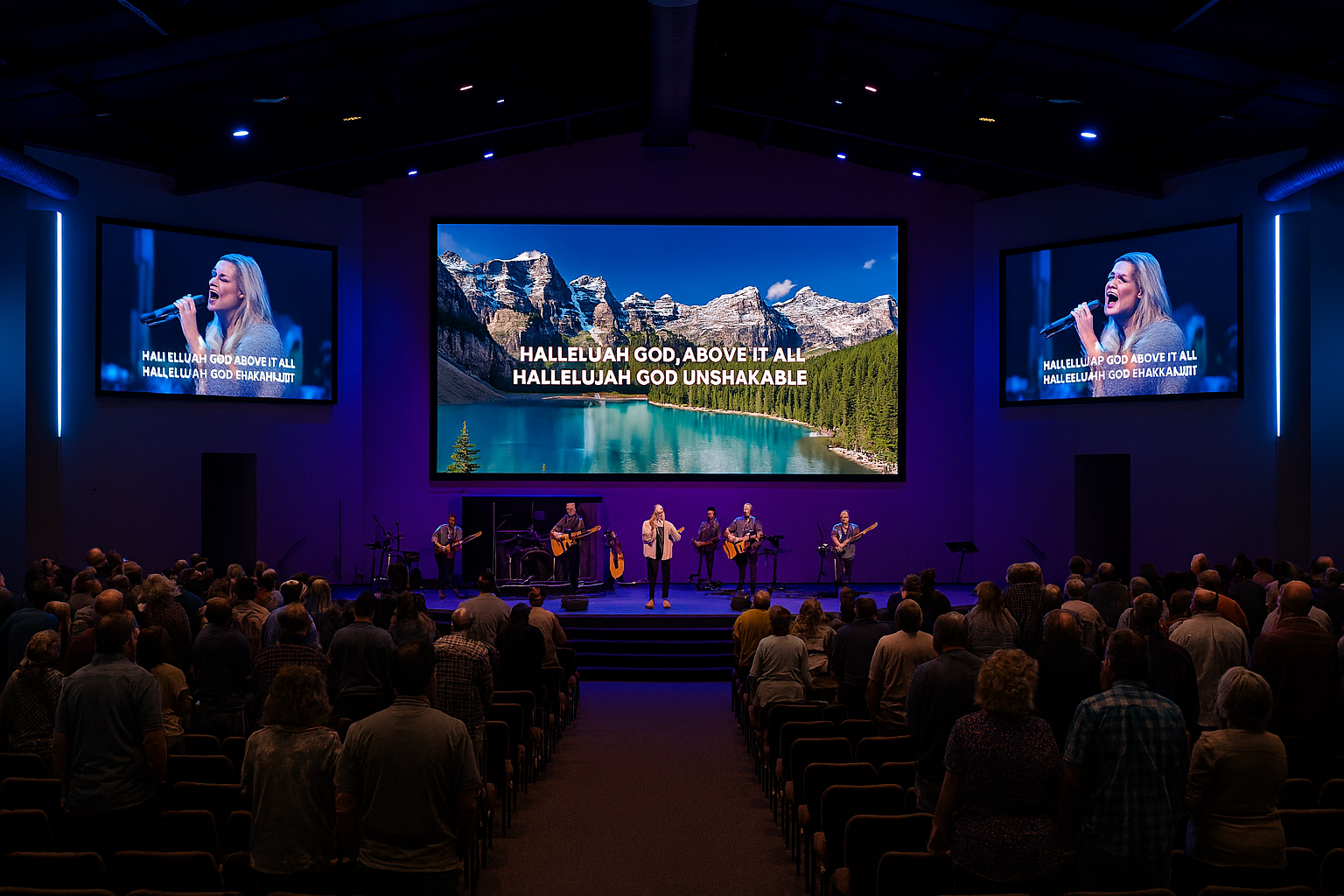
Your church's lighting and display technology shapes every worship experience. When congregants can't read lyrics on a washed-out projector screen, when harsh overhead lights create an unwelcoming atmosphere, or when your stage lighting can't adapt to different service styles — it impacts engagement, connection, and ultimately, your ministry's effectiveness.
Modern LED technology has transformed what's possible for churches of all sizes. Today's LED video walls deliver crystal-clear visibility even in bright sanctuaries. Contemporary LED lighting systems create immersive worship atmospheres while cutting energy costs by 50-70%. And the best part? These solutions have become accessible for churches at every budget level.
This comprehensive guide covers everything you need to know about church LED lighting and video walls — from understanding the technology and calculating costs to choosing the right solutions for your specific worship space.
Quick Answer
Church LED video walls cost $15,000-$75,000+ depending on size, while LED sanctuary lighting upgrades run $5,000-$50,000+. LED screens are 5-10x brighter than projectors (visible even with stage lights), last 10+ years with no bulb replacements, and create seamless displays that engage modern congregations.
Key Takeaways:
- Video wall sizing: Screen width should be 1/8 to 1/10 of your sanctuary width
- LED vs projector: LED wins on brightness, lifespan, maintenance, and total cost of ownership
- Sanctuary lighting: Use warm white (2700K-3000K) for worship atmosphere
- Energy savings: LED lighting cuts electricity costs 50-70% vs traditional fixtures
- Lifespan: LED video walls last 100,000+ hours (19+ years at typical church usage)
- Fast delivery: We ship video wall systems in 3-5 days, not 6-8 weeks
Table of Contents
Why Churches Are Switching to LED
Walk into any growing church planted in the last decade, and you'll likely see LED technology everywhere — from the video wall displaying lyrics to the stage lighting creating worship atmosphere. There's a reason for this shift, and it goes beyond just "looking modern."
The Problem with Traditional Church AV
Traditional projector-based systems and conventional lighting create persistent challenges for churches:
- Washed-out projector images: Morning services with sunlight streaming through windows make screens nearly invisible
- Constant bulb replacements: Projector bulbs cost $200-$800 and need replacement every 2,000-5,000 hours
- High energy bills: Old incandescent and halogen stage lights generate massive electricity costs
- Limited flexibility: Traditional fixtures can't easily adapt between contemporary and traditional service styles
- Heat issues: Hot stage lights make platforms uncomfortable for worship teams
- Shadow problems: Projectors create shadows when anyone walks in front of the beam
How LED Solves These Problems
- Visibility in any lighting: LED video walls produce 2,500-6,000+ nits — visible even with stage lights on and sunlight present
- No consumable parts: LED displays last 100,000+ hours with no bulb replacements
- 50-70% energy savings: Modern LED lighting dramatically reduces electricity costs
- Programmable atmospheres: Create different moods for worship, teaching, and events with one system
- Cool operation: LED produces minimal heat compared to traditional stage lighting
- No shadows: Self-emitting LED walls can't be blocked by people walking past
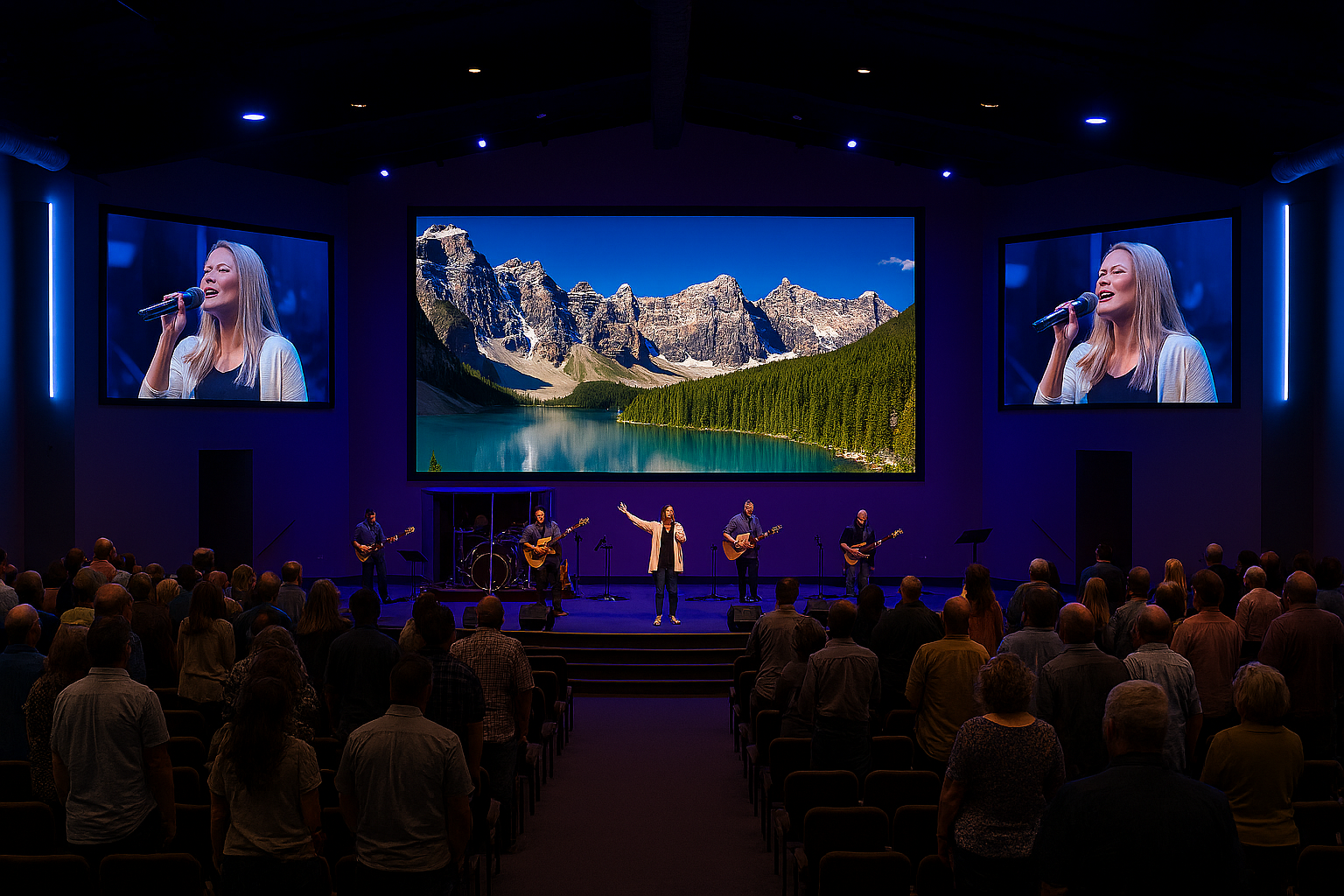
Church Video Walls: Complete Guide
An LED video wall is a large display created by tiling together individual LED panels to form one seamless screen. Unlike traditional monitors or projectors, these panels use thousands of tiny LED diodes to produce incredibly bright, vivid images.
What Churches Use Video Walls For
- Worship lyrics: Clear, readable text visible from every seat in the sanctuary
- Sermon notes and scripture: Display key points and Bible verses during teaching
- Live camera feeds (IMAG): Show close-ups of speakers and worship team for large venues
- Pre-produced videos: Play announcements, testimony videos, and creative content
- Worship backgrounds: Dynamic visual environments that enhance the worship experience
- Live streaming graphics: Professional overlays for online broadcast
Key Specifications for Church Video Walls
Understanding Pixel Pitch for Churches
Pixel pitch is the distance between LED pixels, measured in millimeters. Smaller numbers mean higher resolution but higher cost. For churches, the right pixel pitch depends on your closest viewing distance:
- P1.9-P2.5: Fine pitch for closer seating (front rows 10-15 feet away). Best image quality, premium price.
- P2.5-P3: Sweet spot for most churches. Works well for 15-25 foot minimum viewing distance. Our most popular for sanctuaries.
- P3-P4: Good for larger sanctuaries where closest seats are 25+ feet away. More budget-friendly.
- P4+: Best for very large venues or outdoor church campuses with distant viewing.
💡 Quick Calculation
Divide pixel pitch by 0.3 to get minimum comfortable viewing distance in feet. Example: P2.5 ÷ 0.3 = 8.3 feet minimum viewing distance. If your front row is 15 feet from the screen, P2.5-P4 all work well.
LED Video Wall vs Projector: Which Is Better for Churches?
This is the most common question we get from church tech teams. Here's the honest comparison:
| Factor | LED Video Wall | Projector |
|---|---|---|
| Brightness | 2,500-6,000+ nits | 500-2,000 lumens |
| Ambient light performance | Excellent — visible in any lighting | Poor — washes out in bright rooms |
| Lifespan | 100,000+ hours (no bulb changes) | 2,000-5,000 hours per bulb |
| Maintenance cost | Near zero | $200-$800 per bulb replacement |
| Image quality over time | Consistent for 10+ years | Degrades as bulb ages |
| Shadow issues | None — self-emitting | Yes — people block the beam |
| Upfront cost | Higher ($15,000-$75,000+) | Lower ($3,000-$15,000) |
| 10-year total cost | Lower (no consumables) | Higher (bulbs + maintenance) |
| Visual impact | Modern, impressive | Standard, expected |
The Verdict
LED video walls win for churches that:
- Have bright sanctuaries with windows or ambient lighting during services
- Want maintenance-free operation for 10+ years
- Value visual impact and modern presentation
- Plan to use the system heavily (multiple services + events)
- Have budget for upfront investment with long-term savings
Projectors may still work for churches that:
- Have completely dark, windowless worship spaces
- Have very limited budgets with no flexibility
- Only use displays occasionally
⚠️ Common Mistake
Many churches buy projectors to "save money" then spend thousands on bulb replacements, blackout curtains, and ambient light management — only to still have visibility issues. Calculate total cost of ownership over 5-10 years before deciding.
Ready to Upgrade Your Church's Display?
We have premium P2.5 LED video wall systems in stock at $29,975 — shipping in 3-5 days nationwide. Perfect for churches seeking professional-quality displays without the 6-8 week wait.
Sanctuary LED Lighting Design
Beyond video walls, sanctuary lighting sets the atmosphere for every worship experience. The right LED lighting system creates flexibility between different service styles — from reverent traditional worship to high-energy contemporary services — all with one system.
The Four Zones of Church Lighting
🏛️ House Lights
General sanctuary illumination for the congregation. Use warm white LEDs (2700K-3000K) with full dimming capability. Should be bright enough for reading during announcements, dimmable for worship.
🎭 Stage Lights
Platform illumination for speakers and worship team. Typically includes front wash lights, back lights, and accent lighting. LED moving heads and wash fixtures offer maximum flexibility.
✨ Accent Lights
Architectural highlighting for crosses, baptistries, and design elements. LED uplighting and spot fixtures draw attention to meaningful focal points.
🚨 Emergency Lights
Code-required egress and exit lighting. Modern LED emergency fixtures integrate seamlessly with sanctuary design while meeting safety requirements.
Color Temperature for Worship
Color temperature dramatically affects worship atmosphere:
- 2700K (Warm White): Creates intimate, reverent atmosphere. Ideal for traditional worship, prayer times, and communion. Feels like candlelight.
- 3000K (Soft White): Warm but slightly brighter. Works well for blended worship styles. Most popular for sanctuary house lights.
- 3500K-4000K (Neutral White): Balanced, natural light. Good for teaching-focused services where clarity matters. Can feel less "worshipful."
- 5000K+ (Cool White/Daylight): Bright, energetic feel. Rarely used for worship but sometimes for youth spaces or modern venues.
💡 Pro Tip: Tunable White LEDs
Consider tunable white fixtures that can shift between 2700K-5000K. Start warm (2700K) during worship, shift cooler (3500K) during teaching, then return warm for response time. One fixture system, multiple atmospheres.
Stage Lighting for Modern Worship
Contemporary worship environments typically include:
- LED wash lights: Provide even front lighting for speakers and worship team faces
- LED moving heads: Create dynamic effects, beam patterns, and visual interest
- LED strip/tape lights: Accent stage edges, risers, and architectural elements
- LED uplights: Color wash backgrounds and side walls
- Haze machines: Make light beams visible (optional but impactful)
Church LED Costs & Budgeting
Let's talk real numbers. Church technology budgets vary widely, so here's what to expect at different investment levels:
Video Wall Pricing
Church LED Video Wall Costs
Prices include panels, video processor, and basic mounting. Installation labor additional ($2,000-$8,000 typical).
Sanctuary Lighting Pricing
Church LED Lighting Upgrade Costs
ROI and Energy Savings
LED lighting pays for itself through energy savings:
How to Size Your Church Video Wall
Proper sizing ensures everyone in your sanctuary can comfortably see and read the screen. Here's how to calculate:
The 1/8 to 1/10 Rule
Your screen width should be approximately 1/8 to 1/10 of your sanctuary width:
- 40-foot wide sanctuary: 4-5 foot wide screen
- 60-foot wide sanctuary: 6-8 foot wide screen
- 80-foot wide sanctuary: 8-10 foot wide screen
- 100-foot wide sanctuary: 10-12 foot wide screen
Viewing Distance Considerations
The farthest viewer should be no more than 8x the screen height away for comfortable text reading:
- 6-foot tall screen: Maximum 48 feet to back row
- 8-foot tall screen: Maximum 64 feet to back row
- 10-foot tall screen: Maximum 80 feet to back row
💡 Real-World Recommendation
When in doubt, go slightly larger. Churches almost never complain "our screen is too big" — but frequently wish they'd gone bigger. A video wall can always display smaller content, but you can't make a small screen show bigger.
Single Screen vs Multiple Screens
- Single center screen: Best for focused attention, traditional layouts, and smaller venues
- Two flanking screens: Better sight lines for wide sanctuaries, reduces neck strain for side seating
- Three screens (center + sides): Maximum coverage for large venues, allows different content per screen
Installation Considerations for Churches
Mounting Options
- Wall-mounted: Most common for permanent installations. Requires structural wall capable of supporting weight.
- Flown/Rigged: Suspended from ceiling structure. Good for stages with limited wall space.
- Ground-supported: Stands on floor truss or frame. Allows repositioning but takes floor space.
Electrical Requirements
- Dedicated circuits: Video walls typically need dedicated 20-30 amp circuits
- Surge protection: Essential for protecting your investment from power spikes
- UPS backup: Optional but recommended for graceful shutdown during power outages
Professional vs Volunteer Installation
Professional installation recommended for:
- Permanent wall-mounted or flown installations
- Systems requiring new electrical circuits
- Large or complex configurations
- Situations where church lacks technical volunteers
Volunteer installation may work for:
- Ground-supported temporary setups
- Churches with experienced AV teams
- Simple configurations with good documentation
Pre-Installation Checklist
- Measure sanctuary dimensions and viewing distances
- Identify mounting location and verify structural capacity
- Confirm electrical capacity and circuit availability
- Plan cable routing (power, video, network)
- Consider ambient light sources and control needs
- Verify sight lines from all seating areas
- Coordinate with your worship planning software
- Train volunteer operators before launch Sunday
Need Help Planning Your Church's LED Upgrade?
Our team has helped hundreds of churches across Dallas-Fort Worth and nationwide. We'll help you choose the right solution for your sanctuary, budget, and ministry goals.
Frequently Asked Questions
How much does a church video wall cost?
What size LED screen does my church need?
Is LED better than projector for churches?
What is the best lighting for a church sanctuary?
How much does it cost to upgrade church lighting to LED?
What color temperature is best for church lighting?
Can we install a church video wall ourselves?
How long do church LED video walls last?
Transform Your Worship Experience
The right LED lighting and video wall system transforms how your congregation experiences worship. When everyone can clearly see lyrics and scripture, when your sanctuary lighting creates the perfect atmosphere for each moment of the service, when your tech team isn't fighting with failing projector bulbs — your ministry is free to focus on what matters most.
At Dallas LED Lights, we've helped churches across Dallas-Fort Worth and nationwide upgrade to LED technology. From small chapels to mega-church auditoriums, we understand the unique needs of worship environments and can help you find the right solution for your sanctuary, budget, and ministry goals.
Ready to take the next step? We offer free consultations to help you plan your church's LED upgrade, and we have video wall systems in stock shipping in 3-5 days — so you won't wait months to transform your worship space.